
Lifespan by Material Type
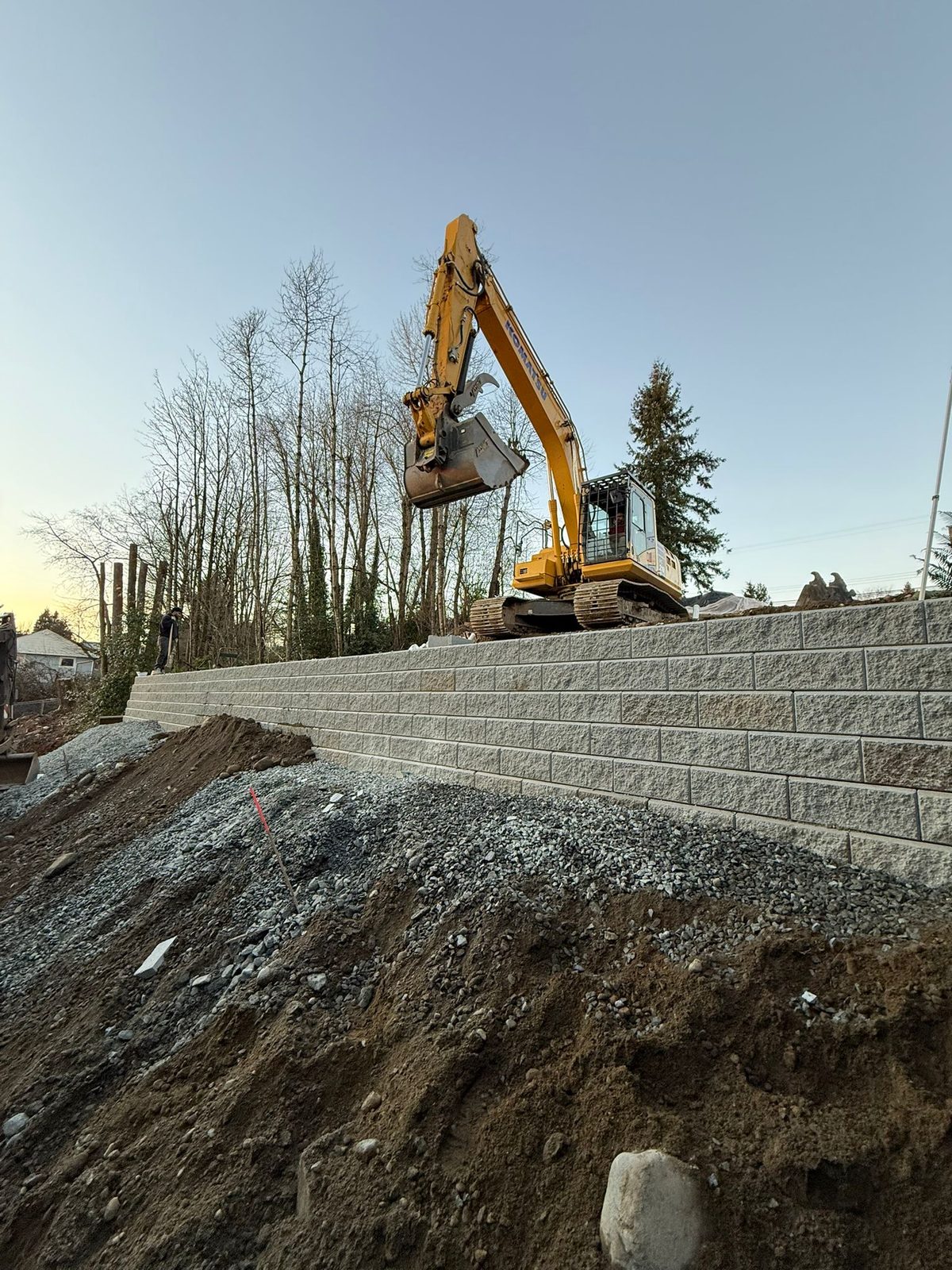
A well built Allan Block or similar manufactured concrete retaining wall in Abbotsford should last 50 years or more. The blocks themselves are engineered to withstand freeze thaw cycles and constant moisture exposure. Natural stone walls built with dense stone like basalt or granite can last even longer, with some natural stone retaining structures lasting well over a century. Boulder walls are the most durable option by material alone, since a properly placed boulder is essentially a piece of the earth that will not degrade in any meaningful timeframe.
These lifespans assume the wall was built with proper drainage, adequate base preparation, correct compaction, and appropriate reinforcement for its height. A wall built without these fundamentals can fail in as few as two to five years regardless of the material used. In the Fraser Valley's clay soil and wet climate, construction quality is the determining factor in how long your wall lasts, not the price tag on the blocks.
Maintenance Factors That Affect Longevity
The drainage system behind your wall is the single most important factor in its long term performance. Over time, fine soil particles can migrate into the gravel backfill and reduce its drainage capacity, even with filter fabric in place. Trees and shrubs planted near the wall can send roots into the drainage pipe. Downspouts, irrigation lines, and grading changes above the wall can increase the water load beyond what the original drainage was designed to handle.
We recommend that Abbotsford homeowners check their retaining wall drainage outlets at least once a year, ideally in early fall before the heavy rain season begins. Make sure the outlet pipe is clear and flowing, check for any signs of erosion at the outlet point, and look for new sources of water being directed toward the wall. A five minute inspection each year can catch problems before they cause structural damage.
Signs of Aging vs Signs of Failure
Normal aging in a concrete block wall includes some surface weathering, minor colour change, and possibly small amounts of moss or algae growth on the face. These are cosmetic and do not affect structural performance. A pressure wash every few years will keep the wall looking fresh if appearance matters to you.
Signs that go beyond normal aging include any outward lean, gaps opening between courses, cracks that grow from one season to the next, or water seeping through the wall face in places where there are no weep holes. These indicate structural or drainage problems that need professional attention. In Abbotsford's climate, catching these signs early is important because the combination of heavy rain and freeze thaw cycles will accelerate any existing problem quickly.
When to Rebuild vs Repair
Minor issues like a few shifted cap blocks, localized settling at one end, or a clogged drainage outlet can often be repaired without rebuilding the entire wall. We can reset blocks, regrade drainage, and reinforce small sections as targeted repairs.
Rebuilding becomes necessary when the wall has moved significantly, when the base has failed, or when the drainage system is compromised in a way that cannot be accessed without removing the wall. If your wall is more than 20 years old and showing multiple signs of distress, rebuilding with modern materials and drainage standards is usually more cost effective than repeated repairs. A rebuild also gives you the opportunity to upgrade the drainage system, add geogrid reinforcement, and correct any design issues from the original construction.
Sources & References
- NCMA Design Manual for Segmental Retaining Walls — National Concrete Masonry Association
- Allan Block Engineering — Long Term Performance — Allan Block Corporation
- ICPI Technical Resources — Maintenance and Inspection — Interlocking Concrete Pavement Institute