
The Problem: Hydrostatic Pressure
Every retaining wall is holding back soil, but it is also holding back water. When rain soaks into the ground behind a wall, that water has to go somewhere. In sandy soil, it drains through and away. In the heavy clay soil that covers most of Abbotsford and the Fraser Valley, water sits and builds up. That trapped water creates hydrostatic pressure against the back of the wall, and it is the number one cause of retaining wall failure in our area.
The numbers are staggering. Water weighs about 62 pounds per cubic foot. A four foot wall that is 20 feet long with saturated clay behind it can have thousands of pounds of water pressure pushing against it. No amount of block, mortar, or geogrid can overcome that pressure indefinitely. The only solution is to make sure the water never builds up in the first place.
How Proper Drainage Works Behind a Retaining Wall
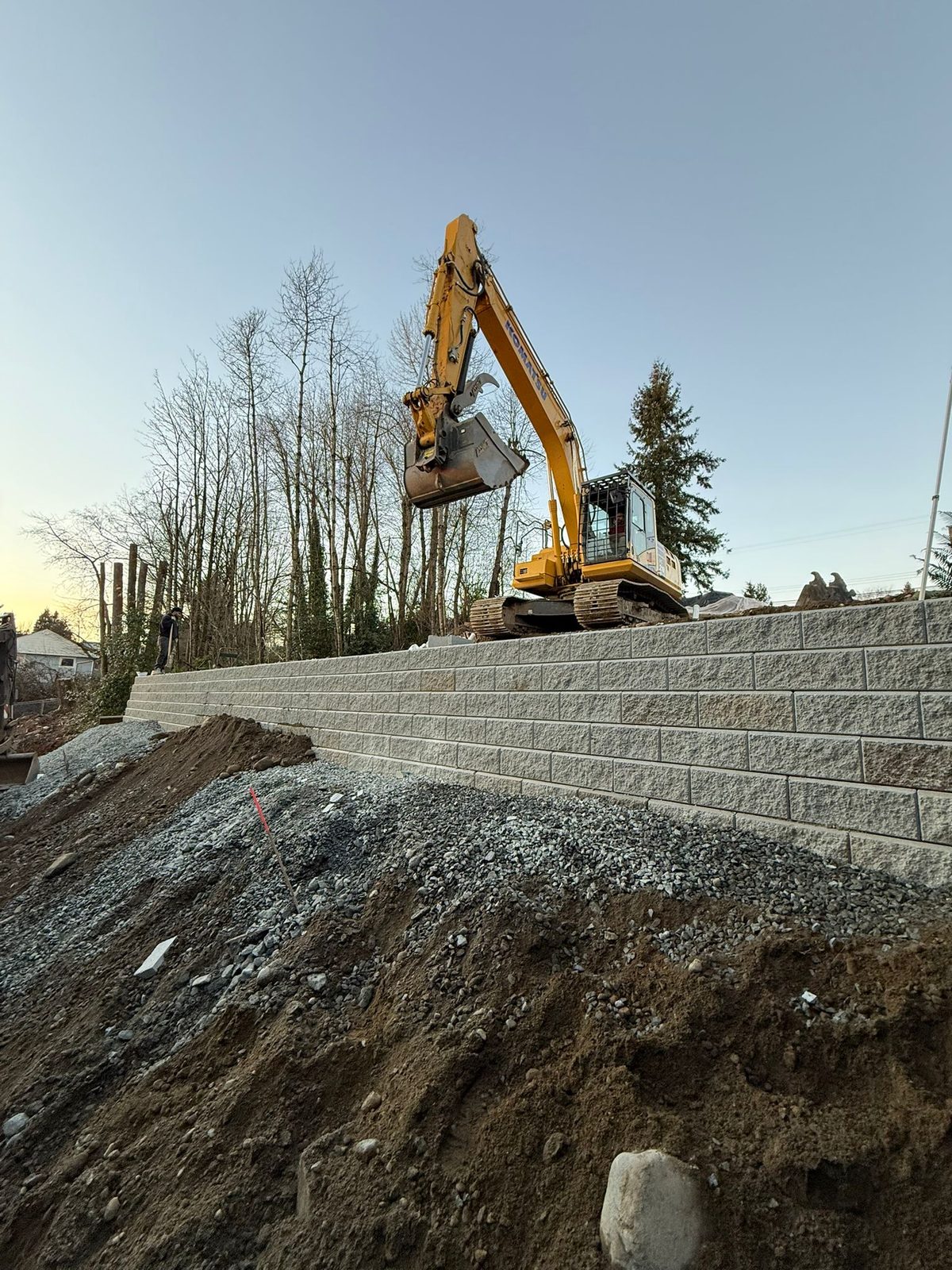
The standard drainage system for a retaining wall in the Fraser Valley starts with a zone of clear crush gravel (typically 19mm or 3/4 inch clear) that fills the space between the back of the wall and the native clay soil. This gravel zone is usually 12 to 18 inches deep and runs the full height of the wall. Water that reaches the back of the wall passes through the gravel and drops to the bottom of the drainage zone.
At the base, a four inch perforated pipe sits in the gravel and collects the water, carrying it to a daylight outlet at one or both ends of the wall. This is essentially a French drain built into the wall structure. The pipe needs to slope toward the outlet, so the wall's base elevation has to account for that fall. Getting this detail wrong means water pools at the low end of the pipe with nowhere to go.
Filter Fabric and Weep Holes
Filter fabric (geotextile) wraps the gravel drainage zone to keep fine clay particles from migrating into the gravel and clogging it over time. Without fabric, our Fraser Valley clay will slowly fill the voids in the gravel, and within a few years the drainage system stops working. We wrap the entire gravel column in filter fabric, overlapping at the top to seal the system against surface soil.
Weep holes are openings through the wall face that allow water to pass directly through the wall at its base. They are an additional relief point for any water that does build up, and they provide a visible indicator of whether the drainage system is working. If you see water seeping from weep holes during a rainstorm, that is actually a good sign. It means water is moving through the system instead of building pressure.
What Happens When Drainage Is Missing
We have removed and replaced retaining walls in Abbotsford that were built with the blocks sitting directly against native clay with zero drainage behind them. Every one of those walls was leaning, cracked, or had already partially collapsed. In one case, a homeowner had a five foot wall that was less than three years old and had tilted four inches outward. When we demolished it, the clay behind was fully saturated and under so much pressure that it oozed out as soon as the blocks were removed.
Installing drainage after the fact is not really possible without tearing the wall down and starting over. The gravel zone and pipe need to be placed during construction. This is why drainage is not an optional upgrade or a place to save money. It is the most critical component of any retaining wall built in our climate.
Sources & References
- NCMA TEK 18-11 — Segmental Retaining Wall Drainage Systems — National Concrete Masonry Association
- Allan Block Engineering — Drainage Design — Allan Block Corporation
- ICPI Technical Resources — Drainage Behind SRWs — Interlocking Concrete Pavement Institute