

Why Fraser Valley Clay Is So Problematic
The soil across most of Abbotsford, Langley, Chilliwack, and Mission is glacial clay deposited thousands of years ago. This clay has an extremely low permeability rate, often less than 0.5 inches per hour. For comparison, sandy soil drains at 6 inches per hour or more. When it rains in the Fraser Valley, and it rains more than 1,500 millimetres a year, water sits on top of the clay layer instead of draining through it. The clay also expands when wet and contracts when dry, creating seasonal movement that shifts foundations, cracks concrete, and destabilizes retaining walls.
You cannot change what the soil is. Every drainage strategy in our area comes down to either moving water away from structures faster than it accumulates or creating pathways through the clay that give water somewhere to go.
Soil Amendment vs Engineered Drainage
Some landscapers recommend amending clay soil with sand, compost, or gypsum. Soil amendment can help in garden beds and lawn areas by improving the top 6 to 12 inches of soil structure. However, amendment does nothing for the metres of clay beneath the surface layer. If your drainage problem involves foundation moisture, a high water table, or large areas of standing water, amending the topsoil is like putting a bandage on a broken bone. You need engineered drainage to solve the actual problem.
In Abbotsford, we use soil amendment as a complement to engineered systems, not a replacement. We might amend the topsoil in a lawn area to improve surface absorption while simultaneously installing a French drain below to handle subsurface water.
French Drains in Clay Soil
French drains work exceptionally well in clay because they provide a high permeability corridor through an otherwise impermeable soil. The trench filled with clean drainage gravel acts like a magnet for water: the surrounding clay pushes water into the gravel because the gravel offers so much less resistance. The key to success in clay is using filter fabric to prevent fine clay particles from migrating into the gravel and clogging the system over time. Without filter fabric, a French drain in Fraser Valley clay can clog in as little as three to five years.
Gravel Trenches and Curtain Drains
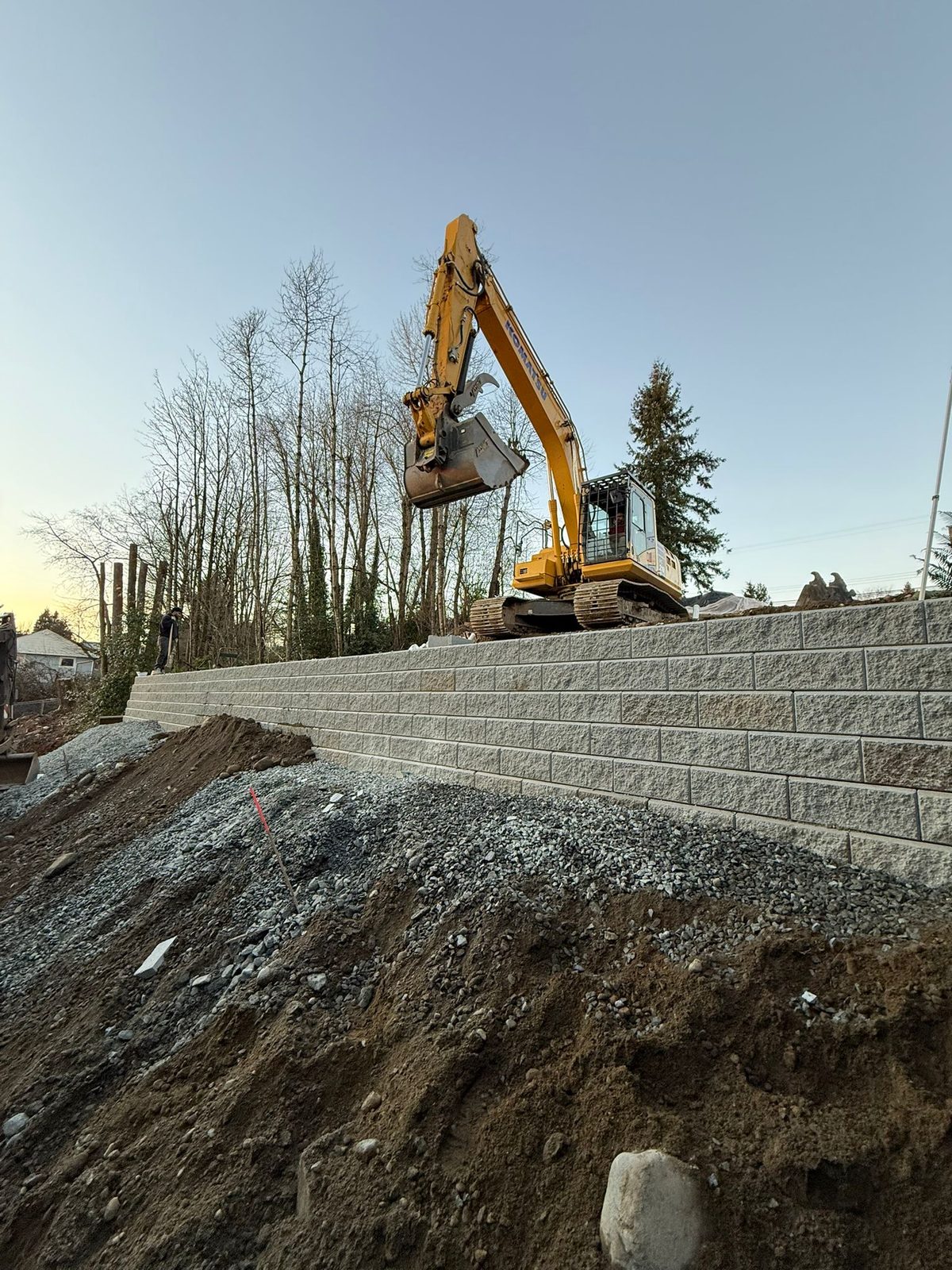
A curtain drain is a variation of the French drain installed uphill of the area you want to protect. It intercepts water flowing through the soil before it reaches your foundation, yard, or retaining wall. In Abbotsford, we install curtain drains across slopes above homes built on hillsides, where groundwater flows downhill through the clay and saturates the lower portion of the lot. The curtain drain catches that water and redirects it around the property. This is one of the most effective strategies for hillside properties throughout the Fraser Valley.
| Soil type | Permeability rate | Recommended approach |
|---|---|---|
| Sandy soil | 6+ inches per hour | Natural infiltration, minimal engineered drainage |
| Loam | 1 to 3 inches per hour | Swales, rain gardens, shallow French drains |
| Silty clay | 0.1 to 0.5 inches per hour | Deeper French drains with filter fabric |
| Fraser Valley glacial clay | Under 0.5 inches per hour | Engineered French and curtain drains to a discharge point |
Sources & References
- Canadian System of Soil Classification — Agriculture and Agri-Food Canada
- Soil Infiltration and Stormwater Design — American Society of Civil Engineers
- Green Infrastructure in Clay Soils — US Environmental Protection Agency