
What Polymeric Sand Actually Is
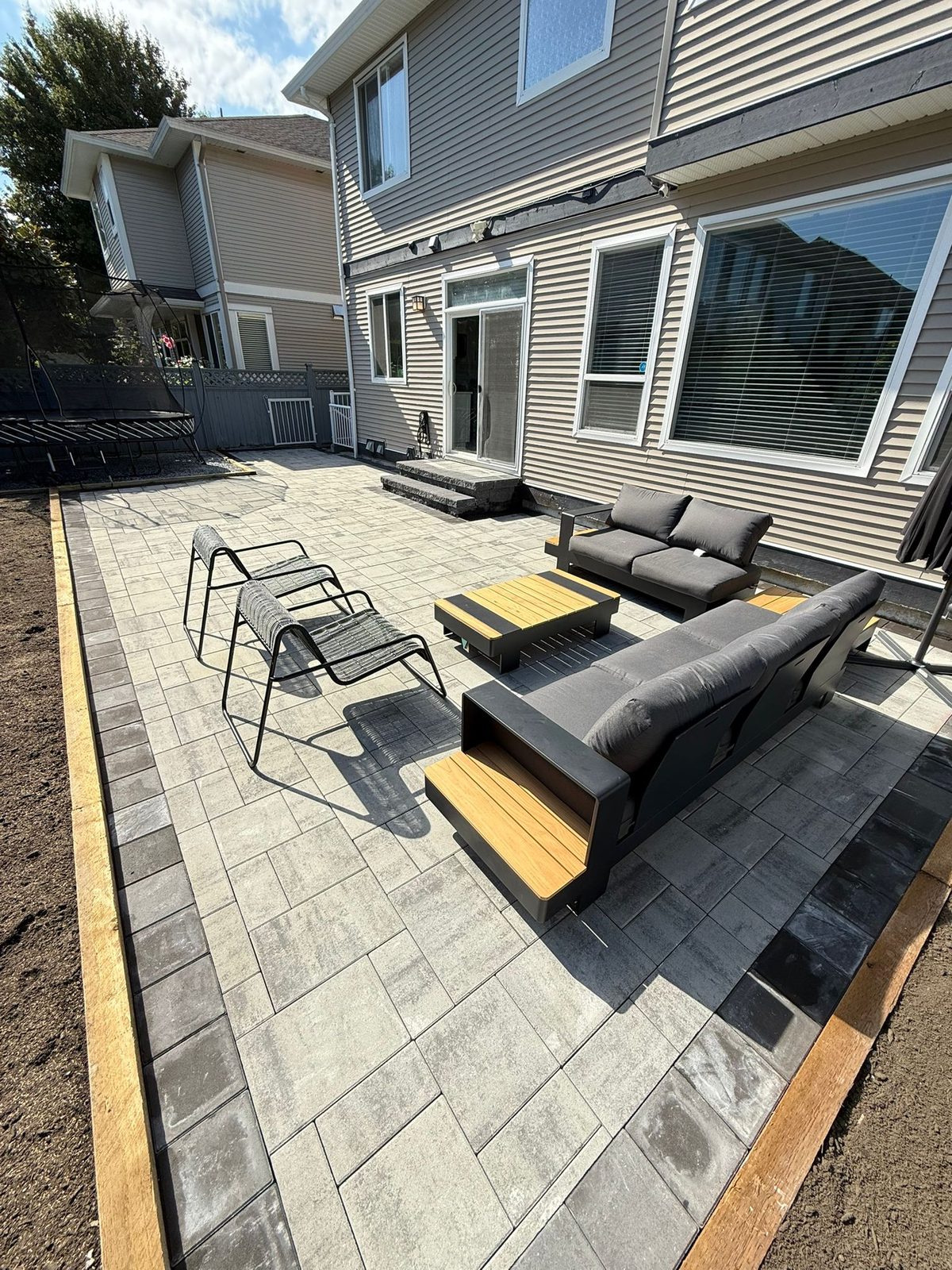
Polymeric sand is fine joint sand mixed with polymer binders that activate when exposed to water. Once you sweep it into the gaps between pavers and mist it with a garden hose, the polymers cure and bind the sand particles together into a semi rigid joint. It fills the same role as regular sand but adds three things regular sand cannot provide: weed resistance, insect resistance, and erosion resistance. In the Abbotsford and Fraser Valley climate, where rain hammers outdoor surfaces for six months straight, polymeric sand is not a luxury upgrade. It is a baseline requirement for any patio that you want to hold together long term.
How to Apply Polymeric Sand Correctly
Application is straightforward but the details matter. Start with dry pavers and dry joints. Sweep the polymeric sand across the surface with a stiff broom, working it into every joint until the sand sits about 3 millimetres below the top of the paver. Sweep all excess off the paver faces completely. This step is critical because any sand left on the surface will haze and bond to the paver face, leaving a white film that is difficult to remove.
Once the surface is clean, mist the entire patio with a gentle shower setting on your garden hose. Avoid a hard jet, which washes the sand out of the joints. Apply water in two to three light passes, allowing each pass to soak in before adding more. The polymers need 24 hours to fully cure, and the surface must stay dry during that window. In Abbotsford, timing your application for a stretch of dry weather is essential. We typically schedule polymeric sand work in July or August when we can reliably get 48 hours without rain.
Benefits Over Regular Joint Sand
Regular sand washes out. That is the simple truth. In a Fraser Valley winter, rainwater flowing across a patio gradually erodes loose sand from the joints, creating gaps where weeds germinate, ants nest, and pavers begin to shift. Polymeric sand resists all three of these problems. Weed seeds cannot push through a hardened polymer joint the way they can through loose sand. Ants and other burrowing insects cannot excavate through it. And the cured joint stays in place even during heavy rainstorms because the bound sand particles do not move with water flow.
On every patio we build in Abbotsford, we include polymeric sand as a standard part of the installation. The material cost is roughly 3 to 5 dollars per square foot of patio surface, which is a small fraction of the total project cost for a major improvement in long term stability.
When to Reapply and What to Watch For
Even the best polymeric sand wears down over time. In the Fraser Valley, expect to reapply every four to six years depending on how much foot traffic your patio gets and how exposed it is to weather. Signs that your polymeric sand needs attention include visible gaps between pavers, sand that has become loose and powdery in the joints, or weeds appearing in joints where they did not grow before. Reapplication follows the same process as the initial install: clean out the old sand with a pressure washer, let the joints dry, sweep in fresh polymeric sand, and activate with water. Most homeowners can handle reapplication as a weekend project.
Sources & References
- ICPI Tech Spec 2 — Construction of Interlocking Concrete Pavements — Interlocking Concrete Pavement Institute
- Techo Bloc Techniseal Polymeric Sand Resources — Techo Bloc
- Environment Canada Climate Normals — Abbotsford A — Environment and Climate Change Canada