
A Realistic Skill Assessment
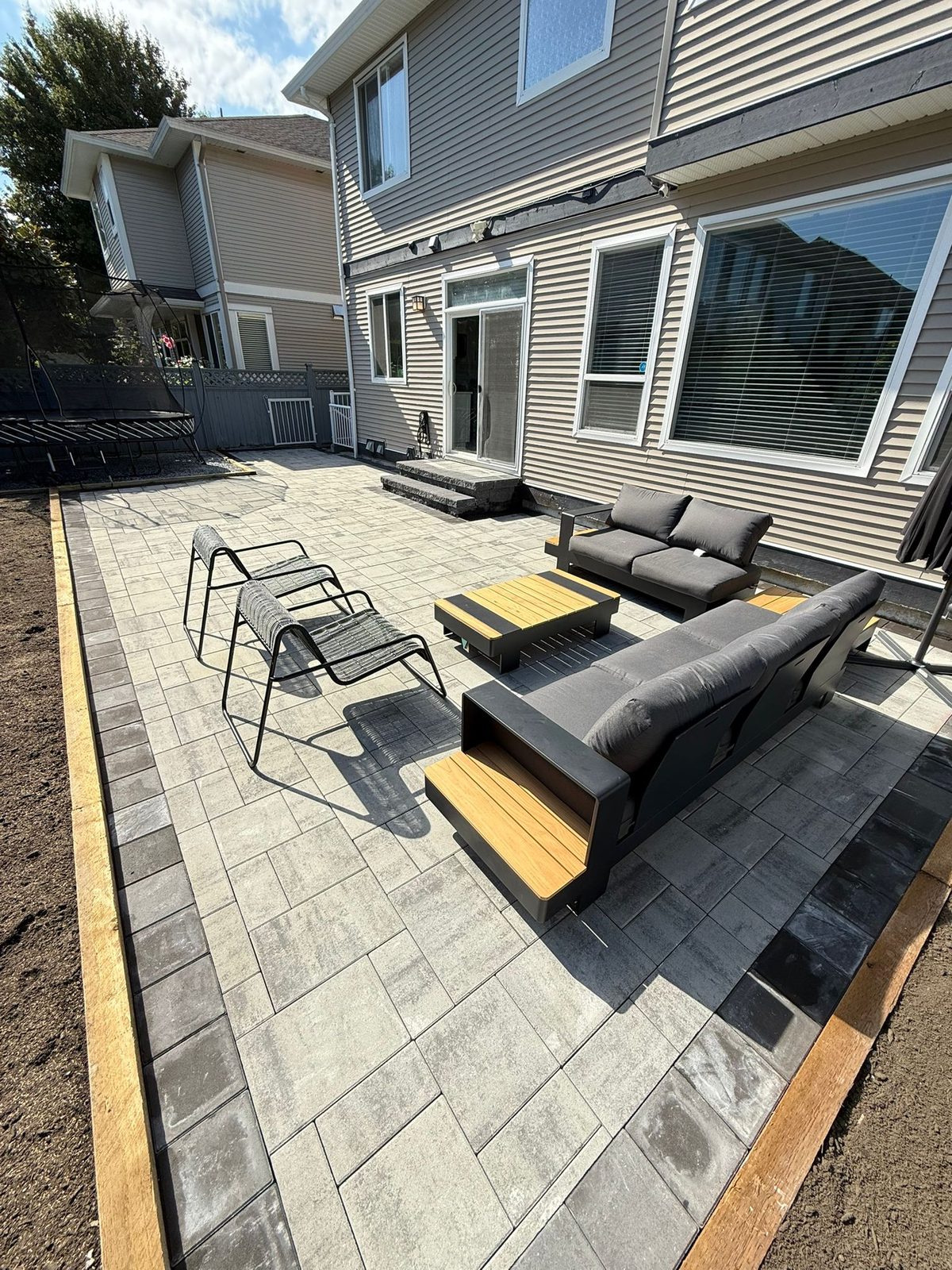
Installing pavers is not technically difficult in the same way that plumbing or electrical work is. There are no codes to follow, no permits required for most patios, and no specialized certifications needed. What makes it hard is the physical labour and the precision required in base preparation. You need to excavate 10 to 12 inches of clay soil (and in Abbotsford, that clay is heavy and sticky), haul it away, import and compact 6 to 8 inches of gravel in lifts, screed a perfectly flat layer of bedding sand, and then lay pavers to a consistent pattern with tight joints. If you have experience with landscaping, grading, or concrete work, you can handle this. If the heaviest tool you have used is a cordless drill, this project will test you.
Cost Comparison: DIY vs Hiring a Contractor
Materials for a 250 square foot patio in Abbotsford cost roughly 2,500 to 4,000 dollars depending on paver choice. That covers pavers, road base gravel, bedding sand, polymeric sand, and edge restraint. Equipment rental (plate compactor, wheelbarrow, hand tamper, and possibly a small excavator) adds 300 to 600 dollars for a weekend. Dump fees for excavated clay run 200 to 400 dollars depending on volume. Total DIY cost: roughly 3,000 to 5,000 dollars plus a full weekend (or two) of hard physical work.
A professional installation of the same patio runs 6,250 to 13,750 dollars depending on paver selection and site complexity. So the savings from doing it yourself are real, typically 40 to 60 percent of the installed price. The question is whether those savings are worth the risk of getting the base wrong, which is the mistake that causes most DIY patios in the Fraser Valley to fail within five years.
The Most Common DIY Mistakes We See
We get called to fix DIY patios regularly, and the same mistakes come up over and over. First: insufficient excavation depth. Homeowners dig 4 to 6 inches when they need 10 to 12 in our clay soil. The patio looks great for one summer, then sinks and heaves through the first winter. Second: inadequate compaction. Renting a plate compactor is not enough if you dump all the gravel at once. It needs to be compacted in 2 inch lifts. Third: no edge restraint. Without a proper plastic or aluminium edge pinned with landscape spikes, the perimeter pavers creep outward over time and the entire layout shifts.
Fourth: applying polymeric sand incorrectly. Activating it with too much water, leaving residue on the paver surface, or applying before a rainstorm are all common errors that result in hazy pavers and failed joints. Each of these mistakes is avoidable, but you need to know about them before you start.
When to Hire a Professional
Hire a professional if your patio involves any of the following: slopes that require grading, areas adjacent to your house foundation where drainage is critical, complex patterns with significant cutting, stairs or elevation changes, or integration with retaining walls or seat walls. These elements require experience and specialized tools. A curved patio with a herringbone pattern and a three step staircase down to a lawn is not a first time DIY project.
Also hire a professional if your time has significant value. A contractor crew of three or four people completes a 250 square foot patio in two to three days. A homeowner working solo or with one helper is looking at two full weekends minimum, plus the physical recovery time in between. In Abbotsford, most homeowners we talk to who attempted a DIY patio say they underestimated the labour by at least double.
When DIY Can Work Well
Small, flat, rectangular patios on accessible lots with good soil are reasonable DIY projects. If your backyard is level, your soil drains decently, you have truck access for material delivery, and you are building a simple running bond pattern under 200 square feet, the project is manageable for a handy homeowner with a free weekend and a willingness to rent a plate compactor. Start with a small project, learn the process, and decide from there whether you want to tackle something larger.
Sources & References
- ICPI Tech Spec 2 — Construction of Interlocking Concrete Pavements — Interlocking Concrete Pavement Institute
- City of Abbotsford — Building Permits and Inspections — City of Abbotsford
- BC Building Code — Government of British Columbia