
Standing Water That Will Not Drain
After a heavy rain, water should absorb into the soil or flow away from your home within a few hours. If puddles are still sitting in your yard 24 to 48 hours later, you have a drainage problem. In Abbotsford, this is extremely common because our native clay soil absorbs water slowly, and many properties were graded poorly during original construction. Standing water is more than an inconvenience. It drowns grass roots, breeds mosquitoes, and slowly saturates the soil against your foundation.
Soggy Lawn and Spongy Ground
If your lawn feels spongy or your shoes sink into the turf even days after the last rain, the soil beneath is saturated and has nowhere to drain. This is different from surface puddles because the problem is below grade. In the Fraser Valley, saturated subsoil is often caused by a high water table combined with clay that acts as a natural barrier. Left untreated, a constantly wet lawn will develop moss, kill grass, and create conditions for root rot in nearby trees and shrubs.
Basement Moisture, Efflorescence, and Mold
White, chalky deposits on your basement walls are called efflorescence. They appear when water moves through concrete, dissolves mineral salts, and deposits them on the surface as it evaporates. Efflorescence itself is not structural damage, but it tells you that water is actively migrating through your foundation walls. If you also notice musty smells, visible mold on drywall or framing, or damp spots on the basement floor, the drainage system around your foundation is either failing or was never installed properly.
In Abbotsford homes built before the early 2000s, perimeter drain systems were often undersized or used inferior pipe that collapses over time. We see this regularly during drainage inspections.
Foundation Cracks and Leaning Walls
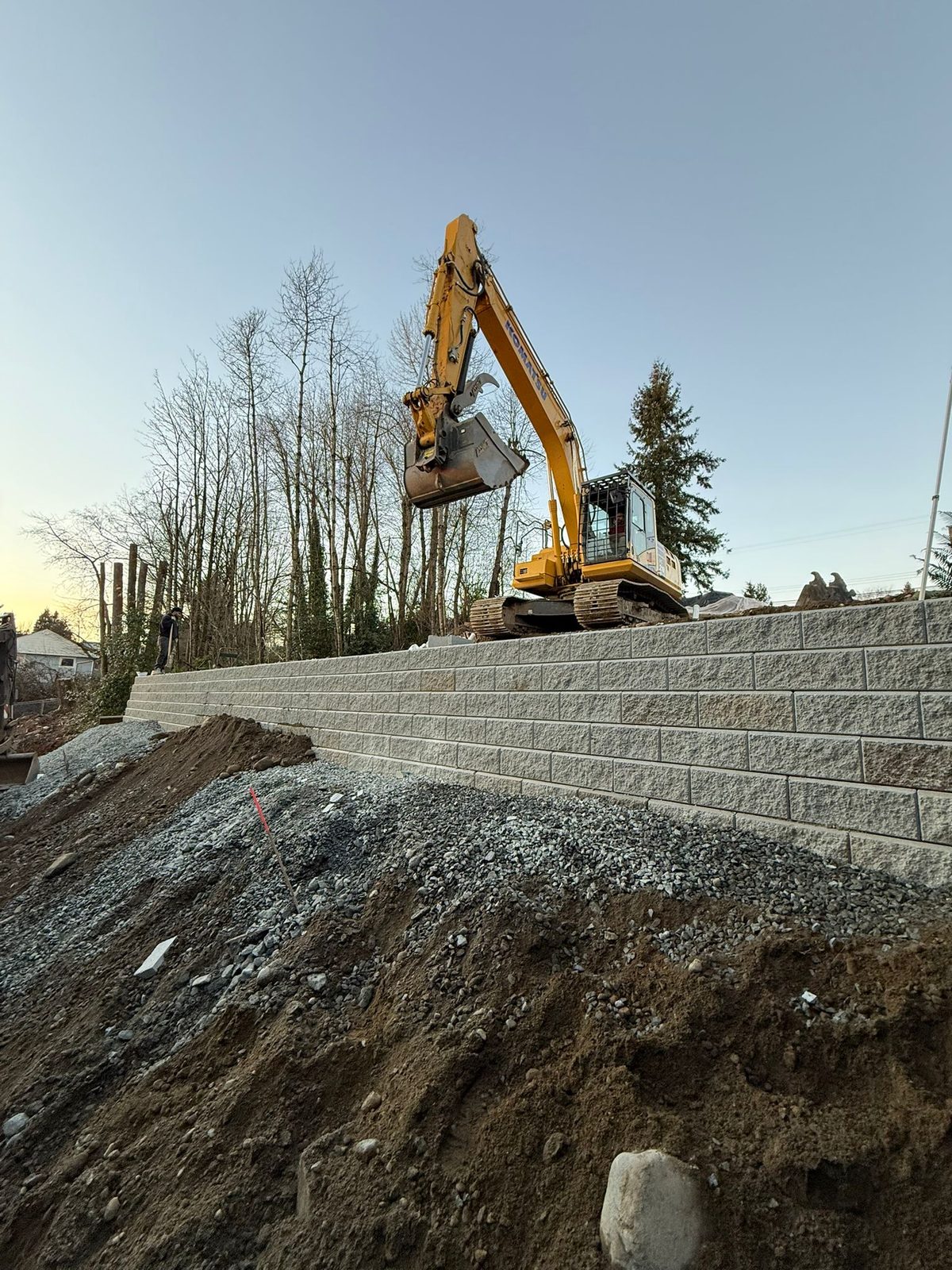
Horizontal cracks in a foundation wall are a serious warning sign. They indicate that hydrostatic pressure from saturated soil is pushing against the wall from the outside. Vertical cracks can be caused by settling, but stair step cracks in block foundations and horizontal cracks in poured concrete are almost always water related. If a retaining wall on your property is leaning, bowing, or separating at the joints, inadequate drainage behind the wall is the most likely cause.
These are not cosmetic issues. Once a foundation wall begins to bow inward, the repair cost escalates quickly from drainage correction into structural reinforcement. The earlier you address the drainage, the less the total repair will cost.
Sources & References
- Home Moisture and Basement Water Problems — US Environmental Protection Agency
- BC Building Code: Drainage and Moisture Control — Province of British Columbia
- Climate Data for Abbotsford — Environment and Climate Change Canada