
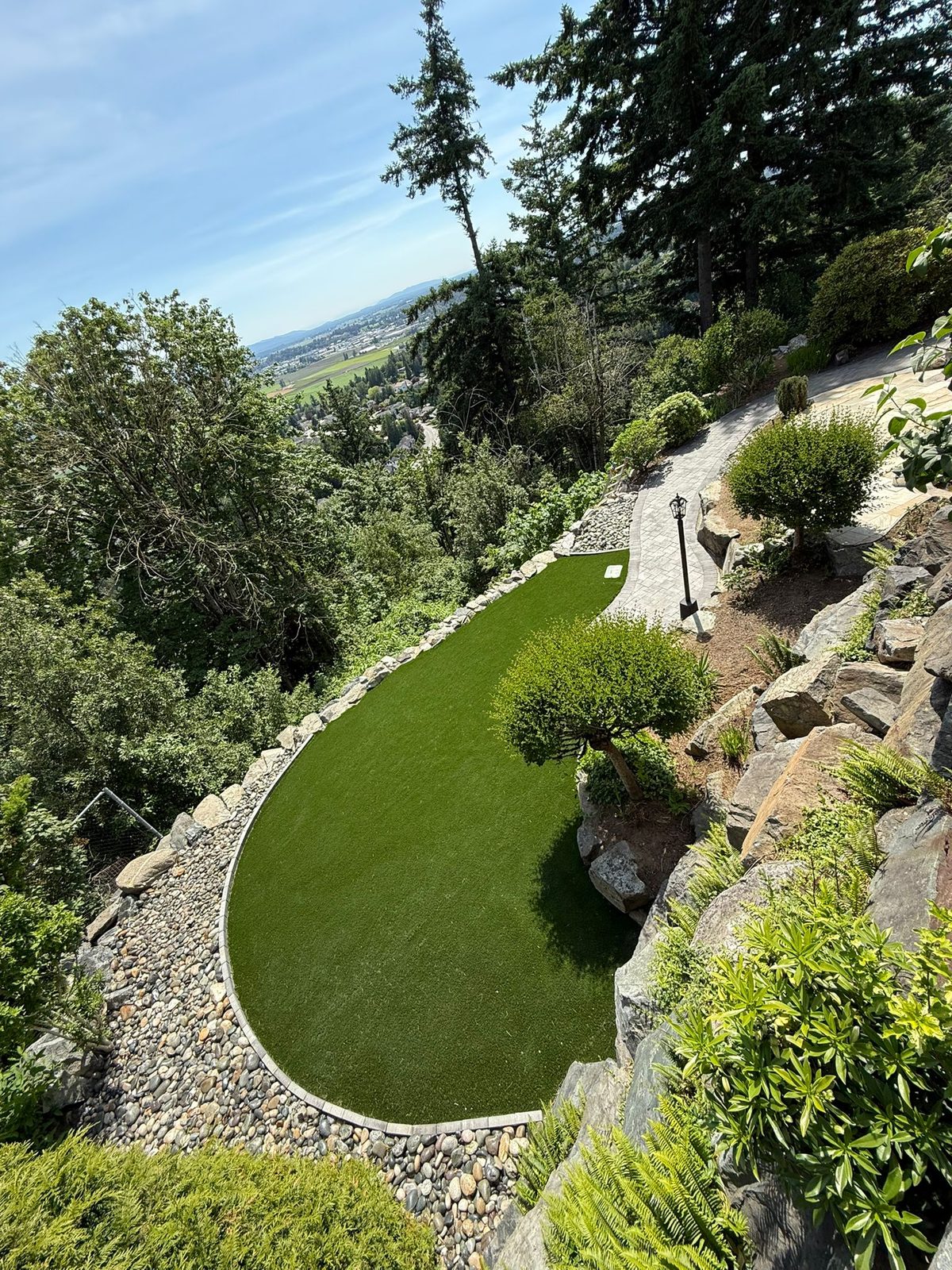
The Honest Answer: Yes, It Gets Warmer
We are not going to sugarcoat this. Artificial turf does absorb more heat than natural grass in direct sunlight. On a 30 degree day in Abbotsford, surface temperatures on turf in full sun can reach 50 to 60 degrees Celsius, while natural grass typically stays within a few degrees of the ambient temperature. This is the single most common concern we hear from homeowners considering turf, and it deserves a straight answer.
That said, the context matters. Abbotsford's summers are mild compared to cities like Phoenix, Las Vegas, or even Kelowna. Our hottest days are typically in the low thirties, and we get maybe two to three weeks of truly hot weather per year. The heat issue that dominates the conversation in Arizona is a much smaller factor in our climate.
How BC's Climate Changes the Equation
The Fraser Valley's moderate summer temperatures mean turf heat is a seasonal concern limited to a handful of weeks rather than a months long problem. Most days between June and September, surface temperatures stay within a comfortable range, especially in the morning and late afternoon when the sun angle is lower. The hours between noon and 3 PM on the hottest days are when surface heat peaks.
Our cooler evening temperatures also help. Unlike desert climates where nights stay warm and the ground never fully cools, Abbotsford evenings drop into the mid teens, and the turf releases its stored heat quickly. By 6 or 7 PM on most summer evenings, the turf surface is comfortable to walk on barefoot.
Practical Strategies to Reduce Heat
Shade is the most effective heat reducer. A mature tree, pergola, or shade sail over part of your turf area can drop surface temperatures by 15 to 20 degrees. If you are planning a new turf installation, consider the shade patterns in your yard and position gathering areas under existing shade.
A quick spray with a garden hose drops turf temperature dramatically and almost instantly. The water evaporates and cools the surface in the same way sweat cools your skin. This effect lasts 30 to 60 minutes on hot days, which is enough time for a play session or outdoor gathering.
Light coloured infill also makes a measurable difference. Standard dark silica sand absorbs heat, while products like Envirofill and other coated infills are lighter in colour and reflect more sunlight. Switching to a heat reducing infill can lower surface temperatures by 10 to 15 degrees compared to standard dark infill.
Putting Heat in Perspective
Concrete patios, asphalt driveways, and natural stone surfaces all get significantly hotter than artificial turf on the same day. A dark asphalt driveway in Abbotsford can hit 65 to 70 degrees Celsius on a hot afternoon, which is higher than any turf surface. Paver patios, composite decking, and metal play structures all present similar or greater heat concerns.
Turf heat is real, but it is manageable with shade, water, and the right infill. For the vast majority of days in the Abbotsford summer, heat is not a practical problem. On the few genuinely hot days, a quick hose down is all it takes.
| Surface | Peak temp (degrees C) | Mitigation |
|---|---|---|
| Natural grass | ~32 | None needed |
| Artificial turf, dark infill | 55 to 60 | Shade, rinse, light infill |
| Artificial turf, light infill | 45 to 50 | Rinse on peak days |
| Concrete patio | 55 to 65 | Shade structure |
| Asphalt driveway | 65 to 70 | Limit barefoot use |
Sources & References
- Synthetic Turf Council — Heat and Surface Temperature Research — Synthetic Turf Council
- Environment and Climate Change Canada — Abbotsford Summer Climate — Government of Canada
- EPA — Heat Island Effect and Urban Surfaces — U.S. Environmental Protection Agency